Sunday, July 26, 2009

Local and Homemade Buttermilk

While this economy has forced us to move away from organic milks and lean more heavily on the local Oakhurst or Cabot dairies, I was delighted to find at our local Hannaford, buttermilk from Kate's! It's a new product for her!

But, if you want to make something that calls for Buttermilk and you don't have it, here's what you can do to make it.

Buttermilk in a Pinch
  • 1 Tablespoon Lemon juice PER 1 Cup of milk.
  • Whisk together and let stand 10 minutes.
Voila!

Saturday, July 25, 2009

Maine Morning Micro Roasters

There is nothing better than locally roasted coffee, and I don't think there is anything more local to me than Maine Morning Micro Roasters. Every time I go to the local farmer's market I smile when I see Heather under the tent for Maine Morning Micro Roasters. This family owned business has a rotating stock of seasonal beans that are hand selected, free trade, or organic; and chosen to ensure "good wages, a healthy working environment for the farmers and healthy coffee beans." Their commitment is clear and they even offer free delivery to those that qualify so please... go check them out! For a look at their current "bean bios" click here!

Monday, June 29, 2009

A Fine Gin and Tonic

Summer is here, and while the weather is not hazy hot and humid, all this rain is certainly making it a bit muggy and hence the season of Gin and Tonics is upon us. SP, on his way home from his most recent northern wind power project, found a bottle of local gin for us to enjoy. Unlike my usual Tangueray, this gin has an enjoyable taste of juniper berries. I really enjoyed the added hint of spice. Made on Sweetgrass Farm in Union Maine, I am pleased to see that along with this gin, they craft and sell an assortment of other locally made wines and spirits.

Thursday, June 25, 2009

Sorrel Salad


Sorrel grows all over my property. Last fall, Amos brought this wonderful local edible to my attention. The sorrel leaf tastes like lemon adding zest to your salads. All winter, I couldn't wait until I could eat it again, and craft some wonderful pestos and salads around it. I am currently working on a recipe I am going to call Sustainable Salad. It was a brain child of two wild edibles and my abundant radish crop!

A couple of my Flowers


Chives and Peony


Sunday, June 7, 2009

An attic full of Glaucomys sabrinus

It's been a while since my last blog. Things have been busy here at our abode. The early spring gave me a healthy head start on the garden. But today, trying to neaten things up inside while SP repaired some outdoor window trim, I heard the unmistakable sound of scratching in the attic over Puckstopper's bedroom. A month or so ago, Puckstopper asked me what the sound in the attic was. I said, "Oh that's nothing dear - it's just the cats in the garage!" Until today, when I heard the noise that was distinctly overhead, did I actually go into the garage to see if my earlier hypothesis could have been correct. I couldn't have been further from correct. The garage comes no where near the ceiling of Puckstopper's room. So, in near panic, I wandered out to the front yard to get SP's attention on the roof.
The funny thing is about 3 years ago to date, I had done a similar thing, pacing like a lone wolf at the foot of his 3 story scaffolding, while SP was building our chimney, waiting for the "right moment" to tell him "the news". The news? Yes, the news that I was pregnant with Baby. His response upon seeing me pacing was a blunt, "What the hell is wrong now!?" Nice way to break the news, eh? Well today, he saw panic and his response was exactly the same. "SP there is something in the attic and I need you to help me get it out NOW!"
Thankfully for our well insulated attic, our house stays very cool in the summer, but today our attic was a sweltering 110 degrees, at least. Following carefully along the beams of the attic, we found the corner that the noise was coming from, but all we saw was undisturbed insulation. SP and both thought, "Hmm... there's nothing there and it is far to hot for anything to WANT to be up here!" but decided that taking a look under the insulation was warranted. Sure enough, with the first piece we pulled back we saw an awesome furry fat grey tail slink away under the insulation. "Aw crap" was the least we said, and proceeded to pull back more, sending the cutest flying squirrel scurrying toward my feet. Fortunately I had a good hold of the rafters and pulled my feet up, and watched it move past me, run the length of the attic, launch itself up into the rafters, and out a hole in the far corner. A hole in the far corner? Did I mention that that chimney project is still not done? That's next weekend's project. Well, one squirrel down, how many more to go? Back to the insulation. We uncovered 2 more squirrels, one quickly squirreled it's way off into the soffit, and the other we managed to get into a box and out to the kids for an exciting Sunday afternoon show and tell in the front yard. After it tried to bite SP and he flung it, we actually got to see it fly. It's nap time now, but we'll be back at the squirrel eradication in a few hours I am sure. Oh the life of being a homeowner in rural Maine.
Isn't he cute? Here's lookin' at you babe!

Sunday, April 26, 2009

Cheese - another way to keep it local

The Portland Press Herald published this article recently about the localvore simplicity of homemade cheese. I found this article through the blog of the Maine Cheese Collective. I recently published the recipe from Gourmet for homemade mozzarella cheese, but the uncanny timing of this article can't go unnoticed. I just returned from a week long trip to New York City, where I was able to dine on any ethnic food I could choose. From American to Italian to Indian to Brazilian and ending with an American Australian - my final meal one morning in Brooklyn was markedly the best. My daughter's Godmother and I ate in Greenpoint at Five Leaves and it was a treat to say the least. The cafe which opened 7 months ago was financially backed by the late Heath Ledger, another yummy favorite of mine. I chose for breakfast the Sage scrambled organic Eggs w/aged cheddar, which served on a roll but the swirly herbed eggs made the most beautiful sandwich I have ever eaten. But my friend's choice was even more stunning: house made ricotta with fresh thyme, chestnut honey, figs, Maldon sea salt and fruit bread. It was heaven in a bowl and an inspiration for the things to come. Before I move along to the point of this blog I must say that everybody should go and eat at Five Leaves. The experience I had at Five Leaves was a reminder that some day we will keep bees and I will make cheese. So when I returned home last night and read through the blog posts on my dashboard, discovering that the Portland Press Herald had written an article titled, "Another way to keep it local? Say cheese", I knew I had come full circle. So without further ado, here are the recipes.

WHOLE MILK RICOTTA

1 gallon whole milk, pasteurized or raw
1 teaspoon citric acid
1 teaspoon salt

In a large stockpot, combine milk, acid and salt. Heat to 185 to 195 degrees, stirring often. Do not boil.

As soon as the curds and whey separate, turn off the heat. The whey should look somewhat clear rather than milky. Let sit for 10 minutes. Line a colander with cheese cloth and place in a large bowl. Ladle the curds into the cloth. Tie the corners of the cloth together and hang for 20 to 30 minutes.

You can hang the cloth from a knob on a kitchen cabinet or use a wooden spoon through the knot to hang over a deep container.

Eat immediately or refrigerate for up to two weeks.

Makes 3 to 4 cups (11/2 to 2 pounds).


As a parting shot, and reminder to go to Five Leaves, my favorite part of the decor was the bathroom door which though baffling at first approach, turns out to be a recycled boiler door.

Thursday, April 16, 2009

Burt's Bees and Happy Green Bee

Any one who strives for the greater good ranks high on my list and one of my favorite companies that do this is the local Burt's Bees. Recently, I happily discovered the children's clothing endeavor they have started a few years ago. Happy Green Bee, is a baby clothes line designed for comfort in the hope that is inspires more organic cotton growth in the U.S. One of my favorite parts about their website is the online factory store where you can buy discounted products! Burt's Bees began in 1984 and has maintained their strong commitment to the environment . Happy green Bee was started in with the mission to create gender-free (yea!) organic (yea again!) children's clothing with sustainable manufacturing practices (hooray!). Their efforts were to meet and increase the demand for organic children's clothing that contribute in positive ways to the welfare of our planet. What else can I ask for as a parent and an ecologist!?
Link

Geolopes

New England Cartographics, of Amherst Massachusetts, reuses their surplus U.S. Government topographic maps by turning them into envelopes and stationary. These unique and affordable mailers are a surprise every time - you never know what area of the U.S. you will receive. The few of these I have I have cherished for years, to the point that I have photocopied some of them in order to preserve the ones I have! These make great gifts as well!

Wednesday, April 15, 2009

Responsible Paper?

I have found a paper company, Mohawk Paper , that matches a lot of I am looking for in an paper supply company. Independently owned Mohawk is headquartered in Cohoes, New York. In 2005, Mohawk acquired the Fine Papers business from International Paper, which included the respected Strathmore, Beckett, Via, and BriteHue brands. Today Mohawk operates three mills (six paper machines) with over 175,000 tons capacity. Mohawk is also known in the industry for its high environmental standards and sustainable practices. The mill offers sustainable paper choices certified by FSC and Green Seal, independent, nonprofit organizations dedicated to environmental standard setting, product certification, claims substantiation, and public education. In addition, Mohawk is one of the first major manufacturing companies to match a significant amount of its electricity with RECs from windpower projects.As of June 1, 2007, Mohawk Fine Papers has increased its purchase of wind-generated electricity RECs to 100,000,000 kWh annually. This represents 100% of all of the electric energy used for all of Mohawk’s manufacturing, converting and distribution operations in New York and Ohio. In 2003 Mohawk became one the first large-scale production facilities in the United States to use non-polluting wind-generated electricity.

100% of the electricity used to manufacture all of Mohawk's paper is matched with Renewable Energy Certificates (RECs). Green-e, the nation’s leading independent certification and verification program for renewable energy products, certifies the RECs to be sure that they meet strict environmental and consumer protection standards.

Treehugger.com has an article about this company too.

Bagasse is better than Biopolymers

Let's face it, unless something catastrophic changes in this world, all the people in the world are not going to opt to use a reusable cup, for those frequent trips to Starbucks. I most certainly did not turn down that cold draft beer when served to me in a plastic cup this past winter. So, until that catastrophe comes though, we need to seriously rethink disposable products we are using.

I have spent the past several hours looking into this whole corn based plastic dilemma and it's farcical biodegradability claim and have discovered that our picnic options can be less taxing on the landfills. Bio-polymers, or the bio-plastics like PLA made from corn, might be renewable but they are not sustainable in terms of waste or byproducts.

Bagasse on the other hand, derived from the byproducts of sugarcane use, is essentially a waste product that once cost sugar mills additional costs for disposal. This fiber, left over after the juice has been squeezed out of sugarcane stalks, is how used as a biomass. It holds promise as a fuel source since as it can produce more than enough heat energy to supply the needs of a common sugar mill. A waste product, it is also used as a locally-grown source for manufacturing cellulose ethanol.

Bagasse
offers new possibilities for disposable or reusable products without the lasting reminder in the landfill. Sugarcane is renewable annually, is widely cultivated in several countries with developing economies, is a convenient way of clearing a waste product, and requires minimal processing to turn it into a usable and high strength paper product.
Paper vs. plastic was the selling point for me. Bagasse products can be found at
TheGreenOffice.com , where I will also be ordering my business supplies from.

Corn to the rescue? I think not.

This is a follow up to my prior post "How Green is It"in which I ranted about the suspicious label of biodegradable on a plastic drinking cup and the disbelief I had in PLA and other corn based "fix-its".

Corn is becoming the ubiquitous fix all for our nation- from packaging to plastics to animal feed - finding far too many unnatural entry points into our product based life. Just because it is made out of corn does not mean that it is natural, nor biodegradable. Maybe I am a purist, but I do not think I am along to believe that biodegrading is what should be happen naturally, as in our compost heaps, and not in some large scale industrial composter (which has it's own very large carbon foot print). In this article, the Smithsonian looked into the misleading notion of biodegradable plastics which is a farce. . It may be a cost effective solution, (in the beginning, it cost $200 to make a pound of PLA; now it’s less than $1) but it is not a solution without it's own environmental problems. “It was a big step backward for the biodegradability movement,” as the article discusses of the advent of the biodegradable bag, “Whole communities abandoned the concept of biodegradable bags as a fraud.” While PLA is a good place to start, it presents us with it's own subset of problems. So, yes, as PLA advocates say, corn plastic is “biodegradable”, but in reality very few consumers have access to the sort of composting facilities that can make it biodegrade. Regardless of it's misleading biodegradable label, it is more often than not listed as a #7 plastic and therefore will end up in a landfill or incinerator like the majority of our nations garbage. The fact is that we need far better alternatives and processes to replace PLA.

To see the entire article, click the link below.
Corn Plastic to the Rescue

Wal-Mart and others are going green with "biodegradable" packaging made from corn. But is this really the answer to America's throwaway culture?
By Elizabeth Royte
Photographs by Brian Smale
Smithsonian magazine, August 2006


Getting to know Goats

I need to know more about goats, and if anyone can help me, I need all the help I can get. It has been a life long dream to be a goat owner. It actually started out as a family joke, when Mom wanted a goat so badly because of her own memories of her grandparents farm and the goats they had. Thanks to Mom's love of goats, I always promised that I would be the child who would get her goats. Unfortunately, Mom passed away before I could make the dream come true, but I promise, the dream will come true. One of my favorite errands to run with Mom as a child was to take our weekly trip to "The Cheese Shop" - yup that is what it was named and we LOVED it! Unlike the other members of our family, Mom and I loved goat cheese. I may name the first goat HiHo, after Mom, but if that's too emotional I will take my sister Mush's advice and name the first goat Feta! If I do name the first one HiHo, I will then name the rest of the flock, decided by temperament, after each of the 7 dwarfs!

As for what kinds of goats I want, I know I want Nigerian Dairy goats. I fell in love with these goats last fall at The Common Ground Fair when I went to a milking demonstration put on by the woman who runs Painted Pepper Farm. Nigerians are small and manageable - perfect for a family farm.

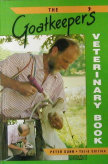
Books I am interested in for researching are the following.

Books from Maine

I have decided to take a break from the stressful things in my life today, and focus on laundry and catching up on some long put-off blogging. The intention of this blog has always been to document my process and research for beginning my own business. While it is a long term plan, that involves moving to our own family farm, much of my research involves finding plants, livestock and products to grow, make and sell once I have the business off the ground. The business will focus on sustainability and local products. One of my favorite products, as a researcher, teacher and parent, is of course books. In December's Down East magazine, they had in inset called "Best Books from Maine" which has been thumbed through and dog eared for far too long. So before that magazine joins the pile of magazines in my "business canvas bag" and or torn into pieces and glued into my journal, I might as well post about the books here!

By a Maine River - A Year of Looking Closely by Thomas and Lee Ann Szelog
A new book, published by Down East Books, features professional photographs of nature and wildlife along the shore of a small Maine river by photographer Tom Szelog. An evocative book that opens our eyes to how closely we live with nature even now, in this 21st century.


A Place Called Maine by Wesley McNair
24 Authors, both native and newcomers who reside and write in all reaches of Maine, write about the Maine experience, described by the Maine Sunday Telegram as"A vision of the Pine Tree State that is, at once, vivid, recognizable, and frank... a rich tapestry."


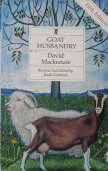
The Year of the Goat - 40,000 miles and the quest for the Perfect Cheese by Margaret Hathaway
I take a particular interest in this book because of my pending research on goats and cheese making. This book is a great starting place for my research on raising goats and making cheese. Part food memoir and part picturesque travel narrative, this book marries the author's twin obsessions with food and all things goat and tells the story of one couple's fascinating journey in search of peace, pastures, and the perfect goat cheese.

Tuesday, April 14, 2009

Watts in the Wind

A month or so ago, during a ski day at the local mountain, my amazing friend Thais told me that there were some sexy new windmills up at a farm on her way from home. Low and behold, on my way to another hockey game for my son, I saw the windmills gracefully aligned with the side of the barn of Springmont Farm. My heart was a flutter as I saw it and I smiled knowing that the age of clean energy was slowly taking hold for the home and small business owners in Maine. Installed in late August, the turbines are providing power to the barn and the chicken operation, allowing excess power to be fed back into the CMP grid. Using the turbines has greatly reduced the amount of oil the farm burns.
And to my delight, the spring 2009 volume of Lake Living has one of these wind turbines gracing it's cover. Residential wind generators are popping up all over the place thanks to the local North Conway, New Hampshire business Green Alternative Energy LLC.
Given the right site and wind speeds, you too might be able to harness the wind and make free energy for your family.

Saturday, April 11, 2009

My dye died.

A quick note to my readers, if I actually have any, that the spinach and coffee dyes failed miserably. The blueberry was nice, but the turmeric was too thick. We resorted to the time tested method after all! Paas be damned, I would like to introduce you to my friend - Food coloring.

Home Made Easter Eggs

I was looking for homemade Easter Egg dyes to accompany my food coloring options. With a tight budget these days, and a lot of our meals coming from what we have on hand in the freezer or pantry, I will be adding a few of these ideas for my Easter eggs as well.

BLUE: Make a Blueberry Dye using 1 cup of mashed blueberries.
GREEN: Make a Spinach Leaf Dye using 1 cup of chopped spinach.
YELLOW: Make a Ground Turmeric Dye using 3-4 Tbsp. of ground turmeric.
BROWN: Make a Coffee Dye substituting 1 quart of brewed black coffee for 1 quart water.
  1. Put the recommended amount of fruit, vegetable or spice in the pot.
  2. Add about 1 cup of water per 1 cup of food, and 2 Tbsp. of white vinegar to pot (water level should be about 1" above ingredients).
  3. Bring to a boil, lower heat and let simmer for 30 minutes.
  4. Strain out excess ingredients with a cheesecloth or coffee filter for a smooth liquid dye.
  5. Let cool to room temperature before dyeing eggs.

Saturday, March 28, 2009

Earth Hour is 8:30 tonight!


Tonight Saturday March 28th, you can vote Earth by switching off your lights for one hour - EARTH HOUR. We are turning off our breaker box at 8:30 tonight in support of Earth Hour. We will cast our vote for cleaner energy. I plan on a candle lit game of cribbage or maybe reading a book by the fire. Earth hour is an important opportunity for the future.

For the first time in history, people of all ages, nationalities, race and background have the opportunity to use their light switch as their vote – Switching off your lights is a vote for Earth, or leaving them on is a vote for global warming. WWF are urging the world to VOTE EARTH and reach the target of 1 billion votes, which will be presented to world leaders at the Global Climate Change Conference in Copenhagen 2009. This meeting will determine official government policies to take action against global warming, which will replace the Kyoto Protocol. It is the chance for the people of the world to make their voice heard.

In 2009, Earth Hour is being taken to the next level, with the goal of 1 billion people switching off their lights as part of a global vote. Unlike any election in history, it is not about what country you’re from, but instead, what planet you’re from. VOTE EARTH is a global call to action for every individual, every business, and every community. A call to stand up and take control over the future of our planet. Over 74 countries and territories have pledged their support to VOTE EARTH during Earth Hour 2009, and this number is growing everyday.

We all have a vote, and every single vote counts. Together we can take control of the future of our planet, for future generations.

VOTE EARTH by simply switching off your lights for one hour, and join the world for Earth Hour.

Wednesday, March 11, 2009

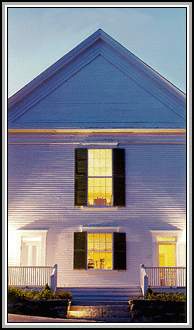
Local products from Robinhood Free Meetinghouse

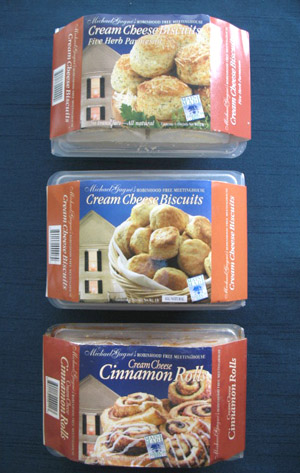
I was excited to find another local product while looking in the freezer section local health food store. Robinhood Free Meetinghouse is now making it's biscuits in a local factory and stocking them in our markets.

Created by Chef Michael Gagne, Gagne Foods is a family-owned company located in coastal Bath, Maine which offers the Robinhood Free Meetinghouse Layered Cream Cheese Biscuits and Cinnamon Rolls. Products from Gagné Foods are now being offered by over 500 major markets and specialty food stores from coast to coast.

What inspired me the most, is that these yummy cream cheese biscuits are made in the area we are trying to move to. We are trying to return to our roots in Bath which is where the factory is. The restaurant is actually in Georgetown, and although it is on the far end of our search radius, how cool would it be to live in a town called Robinhood!?

Please keep an eye out for these products in a freezer section near you!


Support your local economy and join a CSA!

Last week, when I had a few minutes to myself, I stopped into the lovely Beth's Cafe for a bite to eat. I highly recommend a trip to Beth's to help support our local economy. But I am not alone in this recommendation, as she was recently in an article in the New York Times! While enjoying my yummy chicken salad on sour dough with cranberries, I saw on the wall a poster for a local farm called Alma Farm that offered Community Supported Agriculture, or CSA.

Community Supported Agriculture, aka CSA, is a great way to support your local farmers and growers. CSA is a group of individuals who pledge support to a farm operation so that the farmland becomes the community's farm, with the growers and consumers providing mutual support and sharing the risks and benefits of food production. Typically, members or "share-holders" of the farm pledge in advance to cover the anticipated costs of the farm operation and farmer's salary. In return, they receive shares in the farm's bounty throughout the growing season, as well as satisfaction gained from reconnecting to the land and participating directly in food production. More information about CSA can be found at Local Harvest.

I am very excited to peruse their CSA application and become a share holder. We are particularly interested in the meats we may be able to restock our freezer with.

Friday, March 6, 2009

Snowshoe anyone?


Get out and get active! Snowshoeing is one of my favorite forms of exercise and it is eco-friendly because it has zero impact. I found this website and am so excited about it!
Tubbs Trailnet

Tuesday, February 24, 2009

Looking for a Cold Weather Cure?

I found one for you, compliments of my cousin Twigger.
Twigger's Cold Weather Cure
Ingredients
32 ounces cranberry juice
16 ounces pineapple juice
1 teaspoon allspice
1 teaspoon cloves
dash of nutmeg
1 3" stick of cinnamon

Process
  1. Combine all ingredients and bring to a boil.
  2. Reduce heat, cover and simmer until ready to serve.
  3. Strain into mugs and enjoy! Bottoms up!

Wednesday, February 18, 2009

Bison Farms

Local grass fed beef in Maine is not hard to come by. However one unique farm that is close to my home is a Bison farm. I just posted a Bison recipe on my other blog, and thought it was time to give another shout out to a local farm! The history of the bison makes supporting this type of farming even more important. The mighty bison, now safely retrieved from the brink of extinction, is a living symbol of North America's past (from prehistoric times extending through post-Civil War). Once the mainstay of the Plains Indians, bison are again gracing the prairies with their majesty. Take the kids for a visit - it is well worth the trip!

Beech Hill Farm and Bison Ranch
Working Bison into your family diet is also a very healthy choice to make. Comparison of Bison to beef and chicken shows what a healthier choice it is. Lower in fat, cholesterol and calories; Bison offers more Iron and Vitamin B12 than all others (although salmon does offer more B12).

NUTRITION

Fat
(grams )
Calories
(kcal)
Cholesterol
(mg)
Iron
(mg)
Vitamin B12
(mcg)
Bison
2.42
143
82
3.42
2.86
Beef (choice)
10.15
219
86
2.99
2.65
Beef (select)
8.09
201
86
2.99
2.64
Pork
9.66
212
86
1.1
0.75
Chicken
(skinless)
7.41
190
89
1.21
0.33
Sockeye Salmon 10.97 216 87 0.55 5.80
Source: USDA
Come on home to Maine!

Tuesday, February 17, 2009

3 bags of Wyman's berries...

...yielded 6 jars of jam! The baby has been yammering all afternoon, "I want jelly! I want jelly!" which either means he can not handle one more peanut butter and (local) honey sandwich, or else I make the best darn jam in the whole wide world. I am going with the latter, because my house smelled lusciously of raspberry-blueberry-strawberry-blackberry-sugar simmer and boil that even SP came home and said wow! Now, watching those six jar cooling on the counter, I too can not wait until breakfast so I can sample it, and maybe, just maybe, I will make another loaf of acorn bread tomorrow and discover that I really have created my own piece of heaven on earth!

Make your own Silver Dip

Last night, SP ran the dishwasher with a little bleach in it for it's monthly cleaning cycle. Unfortunately, there were some silver baby spoons in it and they came out pretty tarnished and messed up. The good thing is, we have an Eco-friendly recipe for silver dip. So farewell harsh silver chemicals, and hello homemade! Caution: Do not stack the pieces - lay them out separately. So not use on plate, raised patterns or cemented knives.

Ingredients
aluminum foil
non-aluminum pan
2 Tablespoons baking soda
1 Tablespoon salt
boiling water

Process
  1. Place your silverware on some aluminum foil in a non-aluminum pan.
  2. Add baking soda and salt.
  3. Pour boiling water into the pan, enough to fill it up and cover all the silver.
  4. Take out, using tongs, after about five minutes.

Monday, February 16, 2009

Make Your Own Play dough!


Who needs Hasbro when you can make your own play dough at home! Turn a kid friendly cooking recipe into a project in sustainability! Save money and cut down on plastic consumptions by making your own, unique, play dough at home!
Homemade Play Dough

Homemade Baby Wipes

Our good friends just had a baby girl named Asher, who is having some sensitivity to wipes. I offered to change her diaper this morning, and when Dad handed me one wet paper towel and one dry paper towel, I remembered that I too had used paper towels for a sensitive child. I went and quickly dug up my old homemade baby wipes recipe and realized that that was one of my earlier efforts in sustainability. So in honor of Asher, I can't think of a a better post for today than this recipe.

Ingredients
1 3-quart lidded plastic container (like Rubbermaid or Tupperware)
1 roll of paper towels
1 Tablespoon any baby shampoo
2 Tablespoons any baby oil
1.5 cups boiling hot water

Process
  • Cut paper towel roll in half. (you will use 1/2 per recipe so reserve second half for next time)
  • Place half of roll, cut side down, in the plastic container. (do not remove cardboard center)
  • In a bowl, combine all ingredients.
  • Slowly poor over 1/2 paper towel roll.
  • Put lid on, and let towels thoroughly absorb liquid.
  • Remove cardboard center and enjoy many happy diaper changes.

Monday, February 9, 2009

Making your own Mozzarella

I saw this article in January's Gourmet magazine and now know that I will start making my own cheese sooner than I thought. In case you find yourself ready for such an endeavor, I hand you this article in the hopes that it inspires you to do something more sustainable than buying plastic wrapped mozzarella. All you need to buy is salt, citric acid, rennet, cheesecloth, a thermometer and milk.

Make your own Mozzarella

The Recipe.
  • 1 gallon whole milk
  • 1 1/8 teaspoon citric acid
  • 1/4 tablet rennet, crushed
  • 1/4 cup warm water
  • Equipment:

    cheesecloth; kitchen string
  • Heat milk and citric acid to 88°F in a 7- to 8-qt heavy pot over low heat, stirring occasionally, then maintain a temperature of 88 to 91°F on an instant-read thermometer, returning to and removing from heat as necessary, for 1 hour. (Mixture will begin to curdle.)
  • Dissolve rennet in warm water, then stir into milk mixture. Let stand, uncovered, maintaining 88 to 91°F, until the consistency of soft pudding, 15 to 20 minutes.
  • Using a long knife, make cuts across stiffened milk mixture at 1/2-inch intervals, reaching down to bottom of pot, then make similar cuts in stiffened milk mixture to form a crosshatch pattern (small squares) on top. Let stand, undisturbed, 5 minutes. Keeping temperature between 88 and 91°F (reheat when necessary over very low heat), gently stir curds every 10 minutes for 30 minutes, then let curds stand, uncovered and undisturbed, maintaining temperature, 30 minutes more.
  • Line a large sieve with cheesecloth and set over a bowl. Using a ladle or slotted spoon, transfer curds to center of cheesecloth. Gather sides up over curds to form a sack and tie sides together with a long piece of string as close to curds as possible but without squeezing curds. Suspend sack from a knob or cupboard handle, using string, at least 4 inches from bottom of bowl (sack should not sit in any whey that accumulates; if necessary, discard whey as it accumulates). Let hang 3 hours at room temperature.
  • Heat a large pot of heavily salted water (1/3 cup salt for 5 qt water) to 170°F. Place one fourth of the curds in a shallow bowl, then ladle about 6 cups hot water over curds and let stand until curds start to meld together, about 2 minutes. Gather curds together with a slotted spoon and remove from water. Working over the bowl of hot water, gently fold the mass of curds over itself in your hands, stretching as you fold. Reheat in hot water as necessary (3 to 5 times) to maintain temperature, folding and stretching until curds become a smooth and elastic disk.
  • Form into a ball by tucking outside into center, then pinch edges together. Place mozzarella in cool water to cool completely before eating. Make remaining cheese in same manner, reusing hot salted water for subsequent batches.
Cooks’ notes:
  • Curds can be made and drained in cheesecloth (3 hours) 1 day ahead, then chilled in a resealable bag.
  • Mozzarella is best the day it is made but can be kept, covered with water, in refrigerator up to 5 days. Bring to room temperature before serving.

Friday, February 6, 2009

How sustainable is silver?


This is a serious question for me, not in terms of how long it lasts, but in terms of how good or bad it is for the environment. In my craft work, I am trying to understand if silver wire is the wire I want to use for jewelry because of it's ecological ramifications. I understand that it needs to be mined like any other ore which is degrading the environment in one way or another, but my greater concern lies in the smelting process (if that is what it is actually called). I know that aluminum smelting is horrific and kills whole swaths of forests down wind. I have been handed down a piece of silver that has clearly lasted many generations. This one piece I am posting on my recipe blog, dates from the 1800's and is still used regularly in our house. I know that if I chose, I could recycle it, so in that way silver is sustainable. I will never recycle this, but I want to know what it took to make it.

Monday, February 2, 2009

How green is it?

SP and I went away this weekend to Jay Peak Resort in Vermont. They served their drinks in plastic cups, made by a company called Greenware. These cups claim to be 100% Annually Renewable Eco-Friendly packaging. What confuses me, and I am no environmental engineer, is how does a Eco-friendly cup made entirely of plants also become a #7 plastic? What #7 means is that it is an "Other", and this is no reference to LOST, but instead, this code indicates that a package is made with more than one resin and used in a multi-layer combination. Furthermore, it can be composted? I think this little cup I brought home is going in my compost pile instead of my recycling bin because I want to see if it is true. Does this mean that I could eat the cup too? That's a bit facetious but I am a bit of a skeptic today. Before I say more, let me tell you how happy I am that it is all Made in America. That is the biggest bonus of all of this. Are companies taking this Eco-Friendly thing too far and finding loopholes to claim sustainability when in fact they are not? It's made from corn, but just as other things in my life like HFCS, just because it's manipulated out of something natural does not mean it is a good thing. The website states, "Our material expertise extends beyond traditional plastics and into environmentally sustainable or recyclable alternatives such as Polylactic Acid (PLA) and Recycled PET (RPET). PLA is made entirely from corn and is 100% compostable. RPET combines pre and post-consumer resin (like water bottles) to reduce the reliance on new material, conserving resources." What are the byproducts of manipulating corn into clear #7 plasticine drinking cups? How much fossil fuel emissions are there to turn a field of corn into a drinking cup at a mountain restaurant? What good is a compostable drinking cup when it ends up in the garbage and sent to a landfill or incinerator? And if all these cups end up being burned, what are their emissions? Now please don't get me wrong, I still love and support each and every step we are taking towards greater sustainability and reducing our impact on the earth, I just can't help but think that some of these steps are akin to a parallel promotion. The mission of Fabri-Kal does not dissuade my skepticism, "The mission of Fabri-Kal is to:
  • Be a world class manufacturer of quality plastic parts and packages
  • Be recognized as a leader in customer satisfaction
  • Be a growing and financially sound company, providing a fair return to shareholders
  • Assist employees in achieving an attractive lifestyle
  • Manage operations and create products in a safe and environmentally responsible manner"
Plastics are A numero uno in their mission, not the environment, so I think my intuition may be on to something here. So Fabri-Kal, if you read this, what is your carbon footprint and what are you doing to offset it?